Design Challenge
Robotic Rube Goldberg
Design Challenge
Because we never established a concrete plan or outlined any member-specific responsibilities, progress stalled. Two days before the deadline, it became clear that we weren't going to have anything to turn in without a serious push.
In the end, the machine worked sometimes, but honestly failed more often than it succeeded. Even so, I don't consider this project a failure, because of how much I took away from it. Seeing firsthand what happens when a team skips the planning phase gave me a real appreciation for just how important it is. The same goes for cross-team communication, which I now treat as a core part of any project I'm involved in.
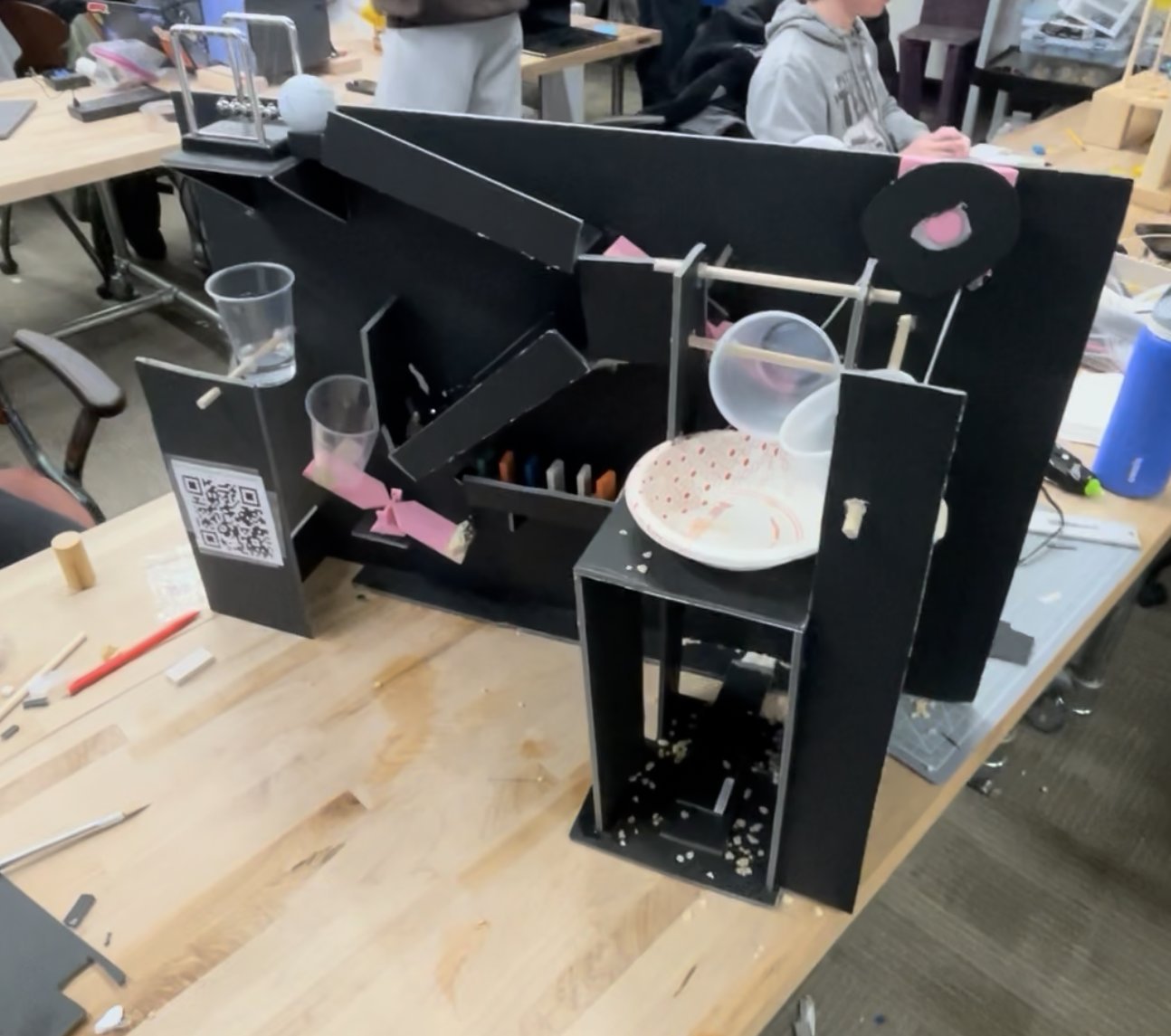
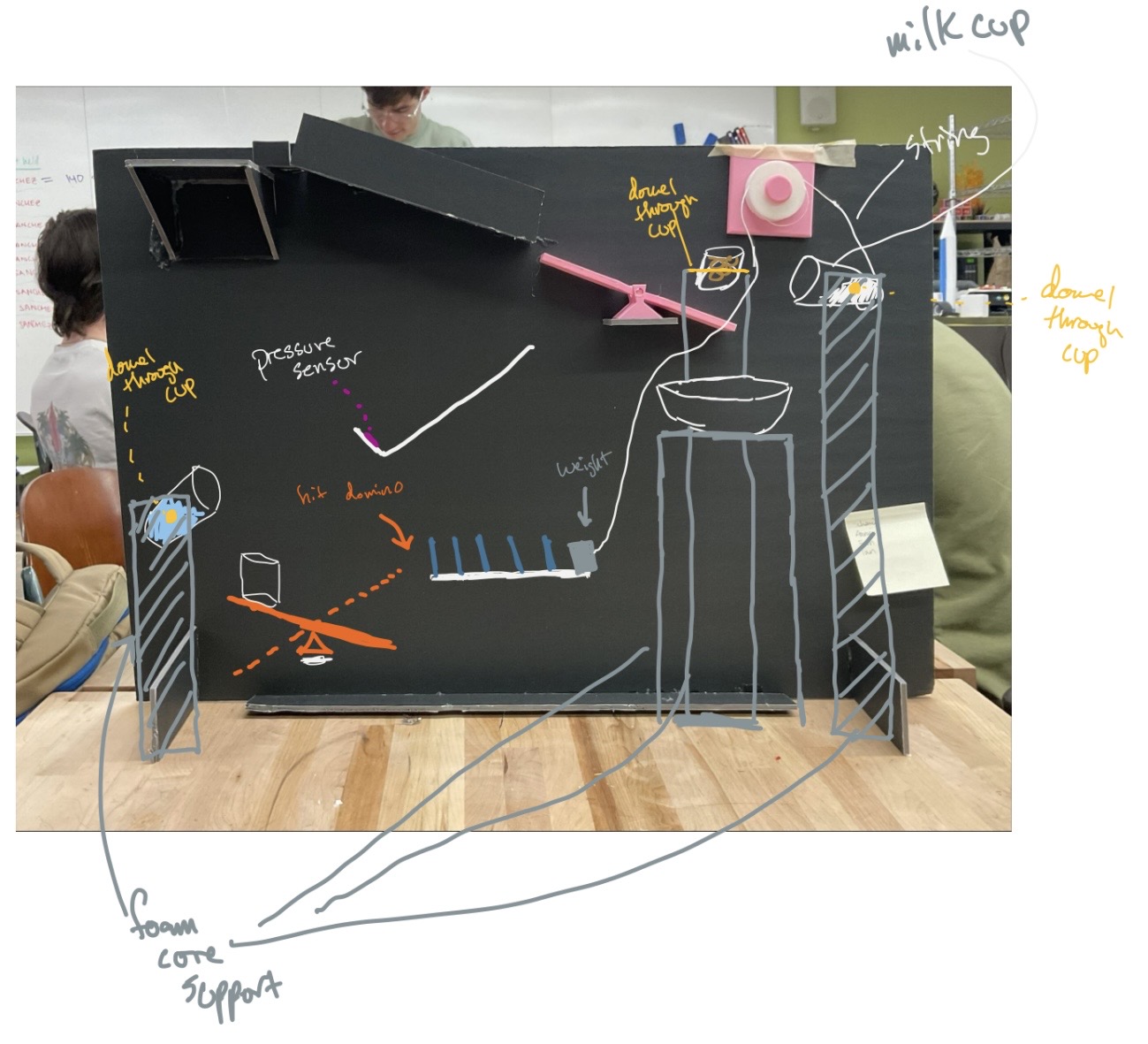
My group's Rube Goldberg machine was one of the most challenging projects I worked on in my Foundations of Engineering Design course. The machine was designed to pour a bowl of cereal using five separate mechanisms triggered by a single impulse, and building it ended up teaching me lessons that went well beyond engineering.
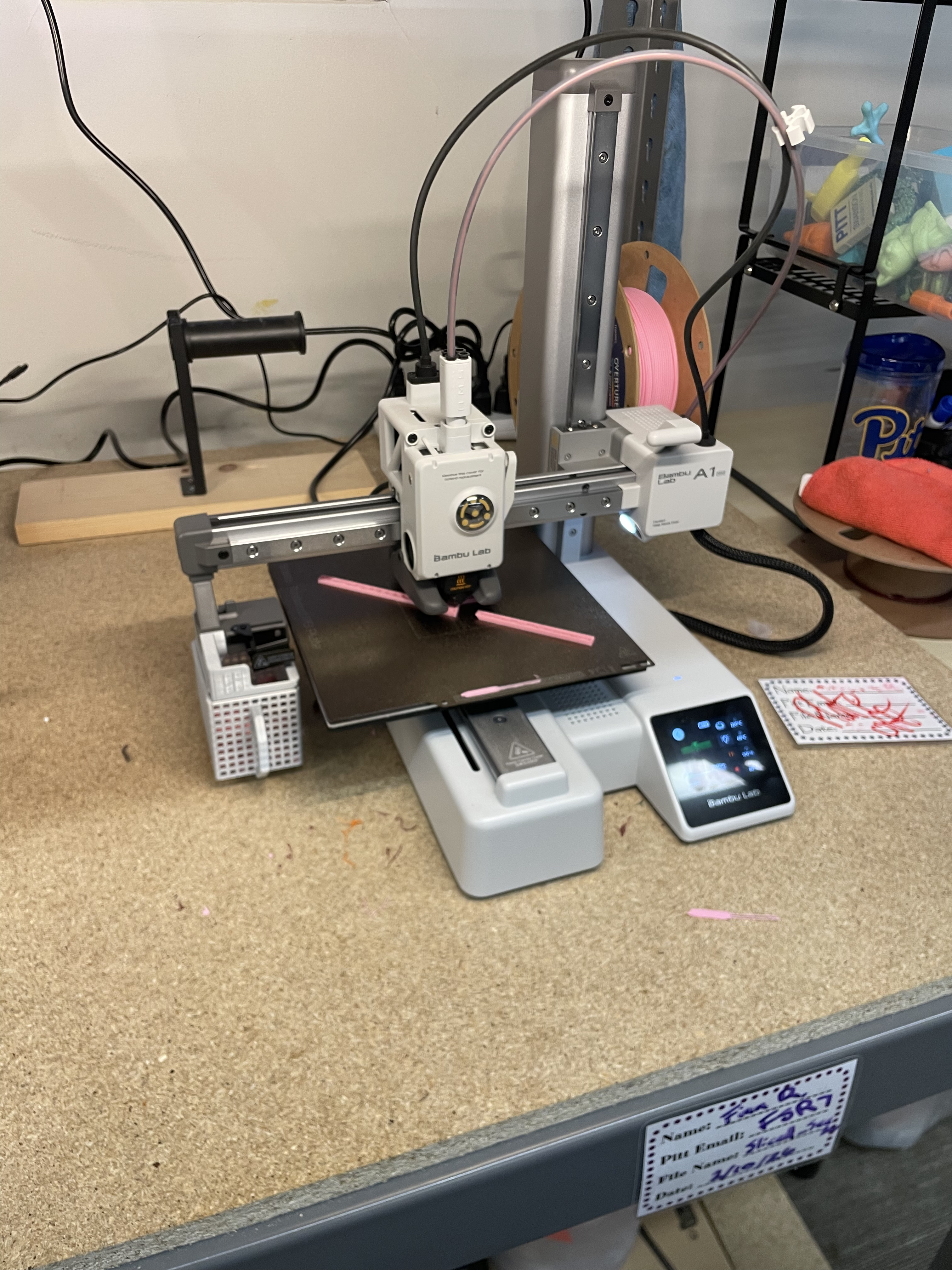
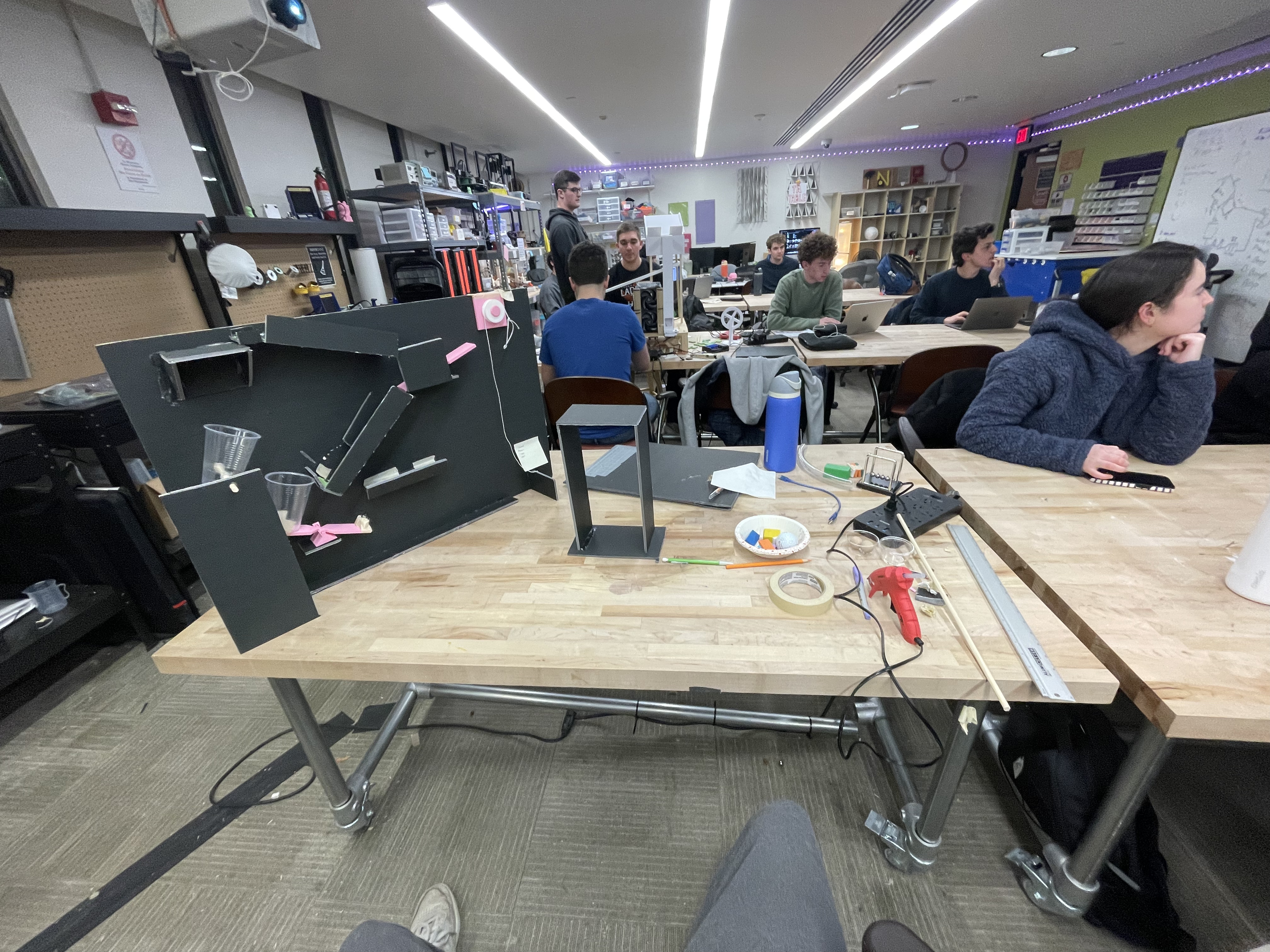
So I got to work. I overhauled our initial designs, exchanging some of the flashier elements for simpler ones given the time we had left. From there, I completed the large majority of the construction, 3D printing seesaws and pulleys, cutting and gluing foam core ramps and supports, and repeatedly testing and adjusting my designs. With the help of one of my teammates, I also drew on what I had learned from a previous Arduino assignment to integrate a motorized mechanism into the machine.